


Emerald green has long been associated with the heart, making it a powerful symbol in art-inspired romance novels and stories of enduring love.
Emerald green is not the shy green of new shoots or the pale green of spring beginnings.
It is the green that has endured.
It carries depth. Weight. Memory.
It is the color of love that has been tested—and chosen anyway.
Emerald green lives where the heart has learned how to stay open without being naïve. Where tenderness no longer requires protection through hardness. Where devotion is not loud, but true.
This is not infatuation green.
This is not first-crush green.
This is the color of love that knows grief, joy, longing, loyalty, sensuality, and still says: yes.
Emerald green sits at the center of the body’s energy—where the chest rises and falls, where grief loosens its grip, where love learns to circulate again.
It is a heart color, but not a fragile one.
Emerald green knows how to regenerate.
Like forests after fire.
Like vines reclaiming old stone.
Like moss growing patiently on ruins, whispering, Life continues.
This is the green of forgiveness that does not erase memory.
The green of love that remembers everything—and stays.
Emerald green is alchemical.
It is what happens when yellow (joy, light, innocence) meets blue (depth, truth, sorrow).
It is joy tempered by wisdom.
Hope grounded in reality.
This is why emeralds have always been associated with the heart—not because love is simple, but because it is enduring.
Emerald green does not rush.
It does not plead.
It does not prove.
It holds.
There is something undeniably sensual about emerald green.
It belongs to velvet shadows, deep water, shaded gardens at dusk.
It is the green of silk dresses and slow dances.
Of palms resting on spines.
Of eyes that linger longer than politeness allows.
Emerald green does not shout desire—it invites it.
This is love that has a body.
A pulse.
A temperature.
Emerald green is not a fleeting emotion.
It is a commitment to life itself.
It is the color of love that grows roots deep enough to withstand storms.
The color of relationships that evolve rather than fracture.
The color of self-love that no longer requires performance.
To choose emerald green is to choose a love that nourishes instead of consumes.
A love that says:
You may come as you are. You may stay. You may grow.
When emerald green starts showing up in your life—your wardrobe, your art, your dreams—it often marks a shift.
A return to the heart after exile.
A reopening after closure.
A readiness for a deeper, truer kind of connection.
Emerald green arrives when the heart is no longer asking to be rescued—but is ready to receive.
Let emerald green remind you:
Emerald green is love that lives.
Love that breathes.
Love that remembers how to grow.
And once you have known this green,
you rarely settle for anything less.
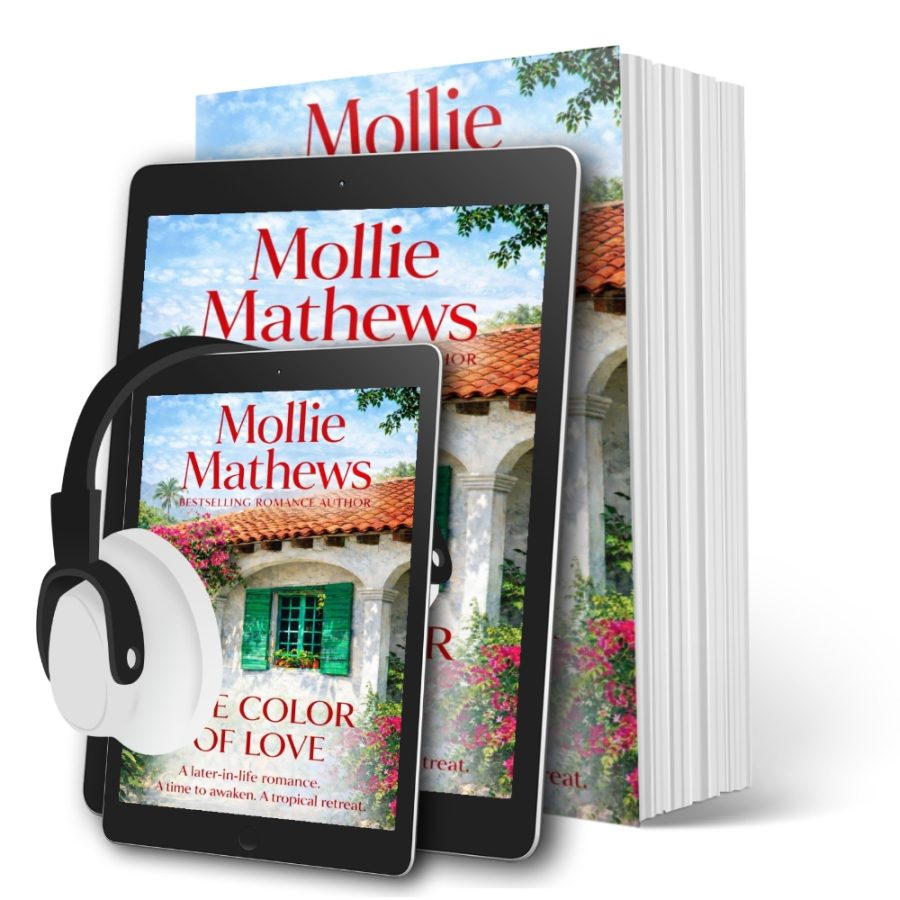
This idea of colour as an emotional language is woven deeply through my novel The Color of Love, where love is experienced not merely as a feeling, but as an atmosphere—something you step into, breathe, and are slowly changed by. In this world, colour carries meaning the way music carries memory. It signals emotional truth before words ever arrive.
Emerald green, in particular, becomes the hue of enduring love—the kind that is not hurried or naive, but rooted, conscious, and alive with depth. It is the green of the heart that has known loss and still chooses devotion. The green of growth that comes not from ease, but from resilience.
That same emerald energy shapes the emotional world of Love in Panama (the prequel to The Color of Love). It lives in the lush landscapes, the rainforest shadows, the filtered light through leaves, the sense of abundance and mystery held close to the earth. Love in this story is not loud or performative; it is grounded, sensual, and quietly powerful—like the land itself.
It is no coincidence that my hero is an emerald mining magnate.
He is a guardian of what lies beneath the surface—of beauty formed under pressure, hidden in darkness, waiting to be revealed. Like emeralds themselves, his love is forged slowly, shaped by time, and immeasurably valuable not because it dazzles at first glance, but because it endures.
In both stories, emerald green becomes a promise: that love, when tended with patience and truth, can be both rare and everlasting.
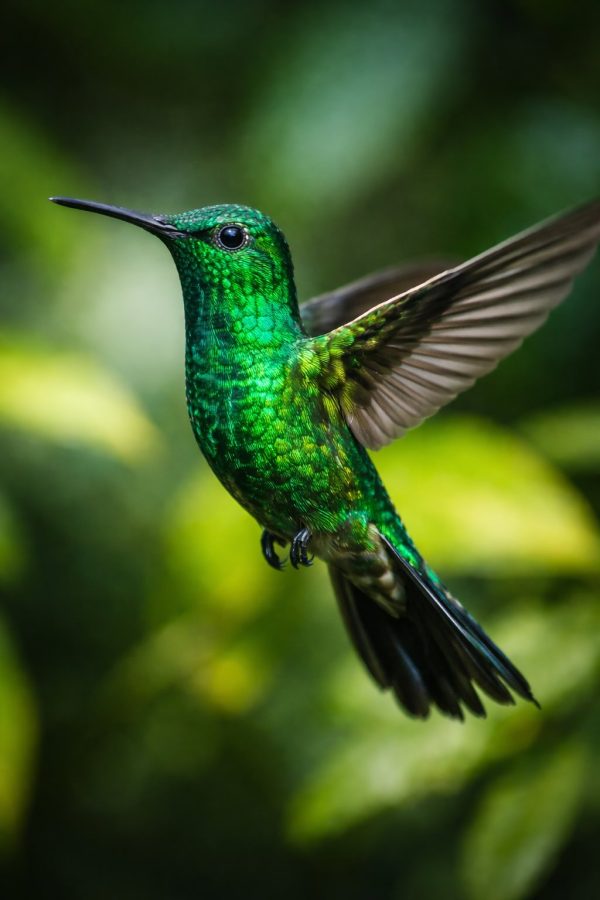
Hummingbirds arrive like living jewels—fleeting, luminous, impossibly alive. They do not land for long. They hover, they shimmer, they remind us that some of the most meaningful encounters are brief yet transformative. In many traditions, the hummingbird is a messenger of the heart: a symbol of joy, resilience, and the ability to draw sweetness from life even after hardship.
Despite their delicate size, hummingbirds are astonishingly strong. They travel vast distances guided by instinct alone, returning again and again to what nourishes them. There is something profoundly romantic in that devotion—the way they remember, the way they choose abundance, the way they refuse heaviness while carrying immense stamina within their tiny bodies.
Spiritually, hummingbirds are often seen as reminders to stay open to beauty, to trust the unseen currents of love and timing. They symbolize the soul’s capacity to heal through lightness rather than force. To love without being burdened. To remain radiant even when life has demanded endurance.
In an emerald-green hummingbird, that symbolism deepens. It becomes a living emblem of heart-centered love—resilient, precious, and rare. A love that hovers gently but is fiercely loyal. A love that knows when to stay, when to move, and how to return.
Like emeralds, hummingbirds are not about possession.
They are about recognition.
You don’t own their presence—you are simply lucky enough to witness it.


Artwork: The Color of Love, Cassandra, 2026
The Color of Love is coming soon! Enjoy the prequel, Love in Panama today.

Mollie Mathews writes romance for women who feel deeply, love beauty, and believe love is an art form. If you find joy and inspiration in her stories, please support her by purchasing, reading and reviewing her love stories.